
Home Health Care vs Hospital Care – Which Is Better?
Home Health Care vs
Hospital Care – Which Is Better?
When a family member is recovering from a major surgery, managing a chronic illness, or dealing with the physical decline of advanced age, one of the most critical decisions you will have to make is choosing where they should receive their medical care. Traditionally, prolonged hospital stays were the only option for serious medical recovery. However, the rapid advancement of modern medical equipment and specialized training has made home health care a highly effective, widely chosen alternative.
Choosing between home health care and hospital care requires balancing multiple factors, including clinical necessity, patient psychological well-being, financial costs, and overall family logistics. This article provides a comprehensive comparison to help you understand which option is genuinely better for your loved one’s specific health needs.
1. Defining the Two Care Systems
Before making a comparison, it is essential to understand what each care model entails in the modern healthcare ecosystem.
Hospital Care
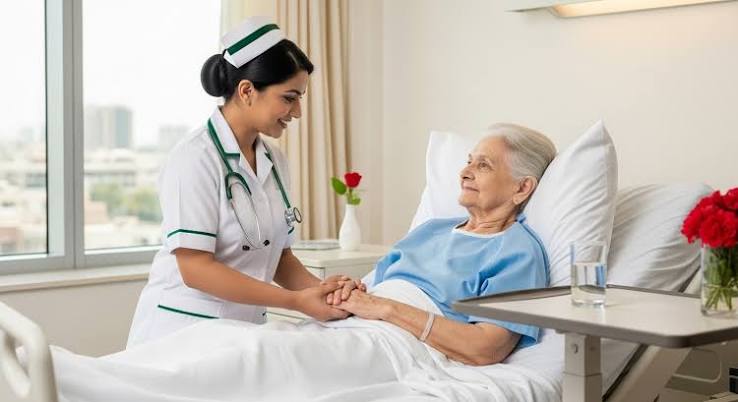
Hospital care refers to inpatient treatment provided within a dedicated medical facility. It is characterized by immediate access to a vast array of specialized physicians, advanced diagnostic laboratories, surgical theaters, and continuous monitoring equipment. It is designed heavily around acute, short-term crisis management.
Home Health Care
Home health care brings professional medical services directly into the patient’s private residence. This care is delivered by licensed registered nurses, physical therapists, speech pathologists, and certified medical assistants. It can range from basic daily assistance to complex clinical services, including intravenous (IV) therapy, advanced wound care, mechanical ventilation management, and vital sign monitoring. It is designed around long-term recovery, comfort, and chronic disease management.
2. Comfort, Environment, and Psychological Impact
The environment in which a patient heals plays a massive role in their speed and success of recovery. The human mind and body are deeply interconnected, and psychological stress can actively delay physical healing.
The Home Advantage
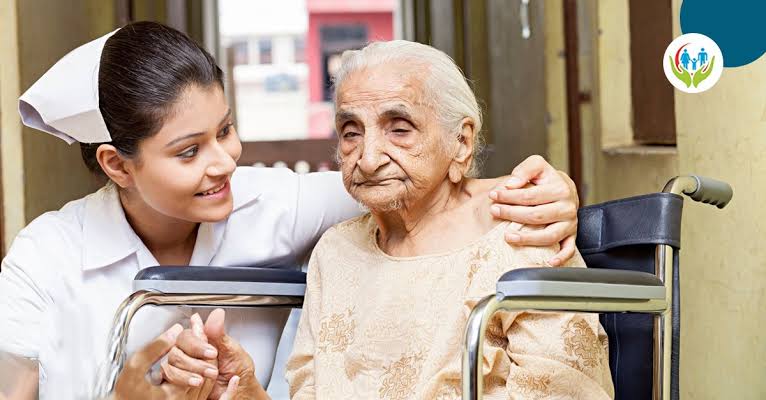
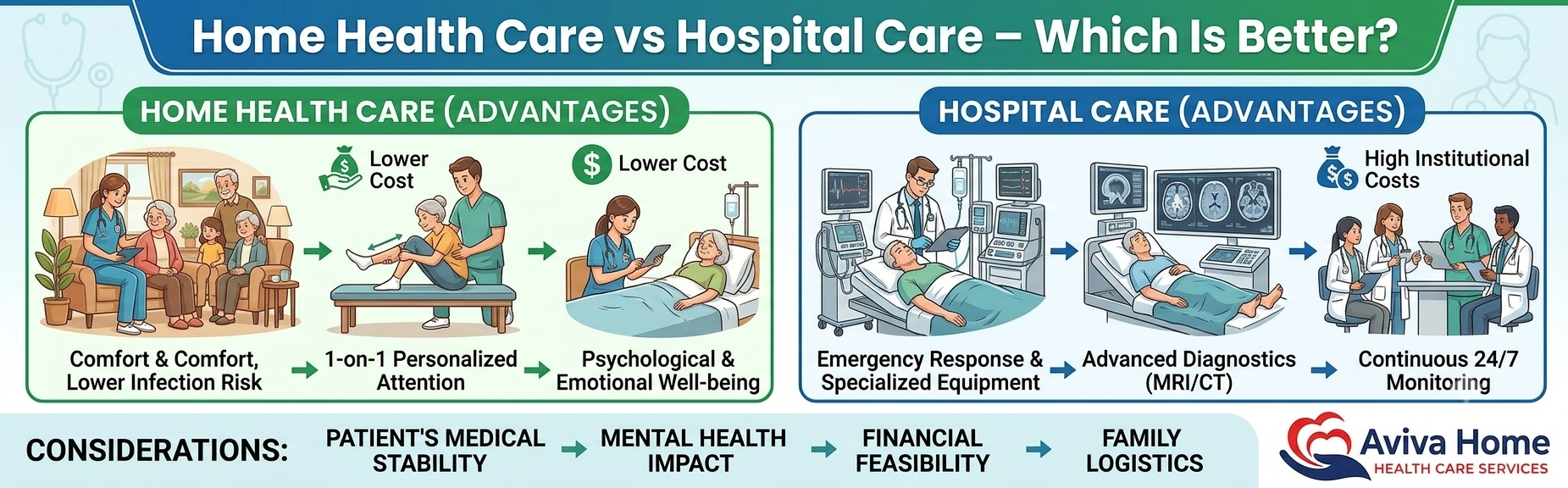
There is an undeniable psychological comfort to being in one’s own home. Patients are surrounded by familiar sights, personal belongings, cherished memories, and their family members. They can sleep in their own bed, eat home-cooked meals according to their preferences, and maintain a sense of control over their daily routine. For elderly patients, especially those suffering from cognitive impairments like dementia or Alzheimer’s, staying in a familiar environment prevents the severe confusion, agitation, and delirium often triggered by unfamiliar hospital rooms.
The Hospital Constraint
Hospitals are, by their very nature, institutional and highly rigid. Patients must adhere to fixed hospital schedules for meals, waking hours, and doctor rounds. The environment is frequently noisy due to continuous machine alarms, overhead announcements, and staff footsteps, which severely disrupts restorative sleep cycles. Furthermore, strict visiting hours can leave patients feeling lonely, isolated, and anxious, which increases stress hormones like cortisol that can hinder immune function.
3. One-on-One Personalized Attention
The ratio of medical staff to patients is a critical indicator of the quality of attentive care provided.
-
In the Hospital: A floor nurse or shift doctor is typically responsible for managing multiple patients simultaneously—often ranging from four to eight patients per nurse depending on the facility. Consequently, a patient only receives direct attention during specific medication passes, vitals checks, or when they press an emergency call button.
-
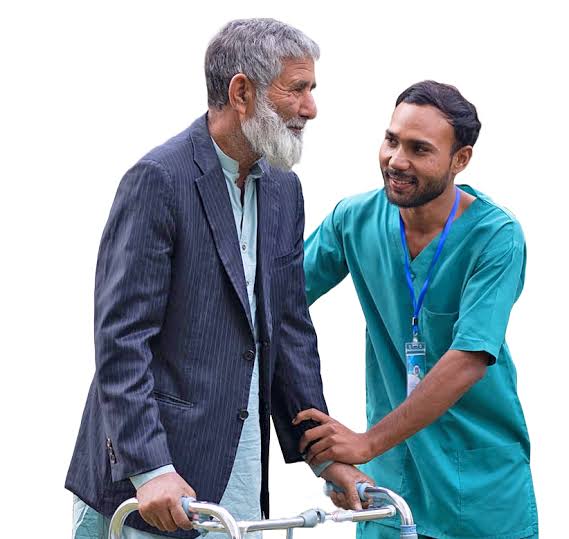
At Home: A home health nurse provides undivided, one-on-one attention for the entirety of their shift. The nurse is entirely focused on a single individual, allowing them to notice even the most subtle changes in the patient’s breathing, skin condition, mood, or cognitive status. This high level of focus often prevents minor health issues from escalating into major medical emergencies.
4. The Risk of Hospital-Acquired Infections (Nosocomial Infections)
One of the most significant, yet frequently overlooked dangers of prolonged hospital stays is exposure to hospital-acquired infections (HAIs), clinically known as nosocomial infections.
Hospitals house individuals suffering from a wide variety of contagious and severe illnesses. Despite strict sterilization protocols, dangerous, antibiotic-resistant bacteria—such as MRSA, C. diff, and highly resistant urinary tract infections—can live on surfaces and spread through medical facilities. A patient recovering from surgery or managing a chronic illness already has a compromised immune system, making them an easy target for these dangerous pathogens.
In contrast, the home environment contains only the patient’s familiar family microflora. The risk of contracting a highly contagious, drug-resistant superbug is significantly lower at home, making it a much safer environment for individuals with weak immune defenses or open surgical wounds.
5. Financial Cost Analysis: A Major Deciding Factor
Healthcare expenses can place an immense financial burden on a family. Evaluating the financial efficiency of both options is necessary for long-term planning.
| Cost Factor | Hospital Care | Home Health Care |
| Room Charges | Extremely high daily room/bed rates. | Zero room charges (patient lives at home). |
| Staff Costs | Built into high institutional overhead bills. | Paid directly for actual hours of care needed. |
| Logistics Expenses | High family commute, food, and parking costs. | Eliminated completely. |
| Long-Term Feasibility | Financially draining for chronic care. | Highly cost-effective for long-term recovery. |
Hospitals carry massive institutional overhead costs, including expensive machinery maintenance, administrative staff, and round-the-clock facility power. These costs are passed down to the consumer through expensive daily room charges.
Home health care eliminates room and board costs entirely. Families only pay for the direct hours of nursing or therapy services required. For chronic or long-term recovery setups, transitioning to a home health care model can save families a massive percentage of overall medical costs while providing a comparable level of clinical supervision.
6. When Hospital Care Remains Unbeatable
While home health care offers exceptional benefits for recovery and long-term management, it is crucial to recognize that hospital care is absolutely irreplaceable in acute, high-risk, or life-threatening situations.
Hospital care is the superior and necessary choice during:
-
Acute Emergencies: Sudden trauma, heart attacks, strokes, severe respiratory failure, or heavy internal bleeding require immediate emergency room intervention.
-
Complex Surgical Procedures: Major operations require highly sterile operating theaters, specialized anesthesia equipment, and immediate access to intensive care units (ICUs).
-
Continuous Advanced Diagnostics: Conditions that require frequent, immediate MRI scans, CT scans, complex laboratory blood panels, or real-time internal monitoring cannot be handled effectively at home.
Home health care should not be viewed as a replacement for emergency medicine, but rather as a highly effective transitional step for post-hospital rehabilitation and chronic care.
7. How to Decide: The Selection Matrix
To determine which care path is genuinely better for your family’s unique situation, ask yourself the following critical questions:
-
Is the patient’s condition medically stable? If the patient requires constant changes to life-support settings, continuous lab work, or is in an unpredictable condition, they belong in a hospital. If their medication routine is fixed, their wounds are stable, and they are in a phase of steady rehabilitation, home care is better.
-
What is the patient’s mental preference? If a patient is deeply unhappy in a hospital setting and begs to go home, their emotional distress can actively stall their physical recovery. Bringing them home with a professional nurse often jumpstarts their healing process.
-
Can the family handle the logistics? Home care requires a safe, clean physical environment with adequate space for a medical bed or necessary supplies. It also requires coordination with professional agencies to ensure seamless shift coverage.
Conclusion: The Power of a Transitional Approach
Ultimately, neither care system is universally “better” than the other; rather, they serve completely different stages of a patient’s health journey. Hospital care is optimal for conquering short-term, acute medical crises, while home health care is the superior choice for long-term recovery, chronic disease management, and maximizing a patient’s daily quality of life and personal dignity.
For most families, the ideal path is a well-planned transitional model: utilizing the hospital to stabilize the initial medical issue, and then immediately transitioning the patient to a professional home health care setting to complete their rehabilitation safely and comfortably.
If you are ready to transition a family member from a hospital environment to structured clinical care at home, you can access dedicated professional support through Aviva Home Health Care Services. They provide fully qualified, verified male and female nurses, skilled physiotherapists, and complete medical equipment setups across Lahore. By partnering with a trusted professional service, you can bring the clinical safety of a hospital directly into the peaceful, comforting surroundings of your own home, ensuring your loved one receives the absolute best of both worlds.