
Caring for Bedridden Patients at Home in Lahore: A Comprehensive Guide
Caring for a bedridden loved one is one of the most deeply compassionate yet emotionally and physically demanding responsibilities a family can face. Whether your family member is confined to bed due to advanced age, a severe stroke, a traumatic accident, spinal injuries, or terminal illness, their quality of life depends entirely on the standard of daily care they receive.
In a bustling city like Lahore, managing a bedridden patient presents unique challenges. The extreme summer heat, traffic congestion that complicates frequent hospital visits, and the difficulty of setting up proper medical equipment at home can quickly overwhelm untrained family members.
This comprehensive, 1500-word guide serves as a practical manual for families in Lahore. It covers everything from medical management and hygiene to emotional support and professional nursing options, ensuring your loved one receives hospital-grade care in the comfort of their own home.
1. Understanding the Challenges of Bedridden Care in Lahore
When a patient becomes permanently or temporarily bedridden, their body undergoes drastic changes. The lack of mobility affects every major organ system, leading to predictable physical complications if preventative measures are not taken.
In Lahore, environmental factors worsen these risks. High humidity and intense summer temperatures accelerate skin breakdown, making bedridden patients highly susceptible to severe infections. Furthermore, the traditional structure of joint families in Pakistan means multiple relatives often try to help, but without formal medical training, critical signs of health deterioration can be missed. Professional, structured home care is essential to navigate these complexities safely.
2. Preventing and Managing Bedsores (Pressure Ulcers)
Bedsores, also known as pressure ulcers, are the single greatest threat to a bedridden patient’s health. They form when the weight of the body cuts off blood supply to the skin over bony areas, such as the tailbone, hips, heels, and shoulder blades. Within just a few days of poor circulation, the skin can break open, creating deep, painful wounds that are incredibly difficult to heal and highly prone to dangerous bacterial infections.
The Two-Hour Turning Rule
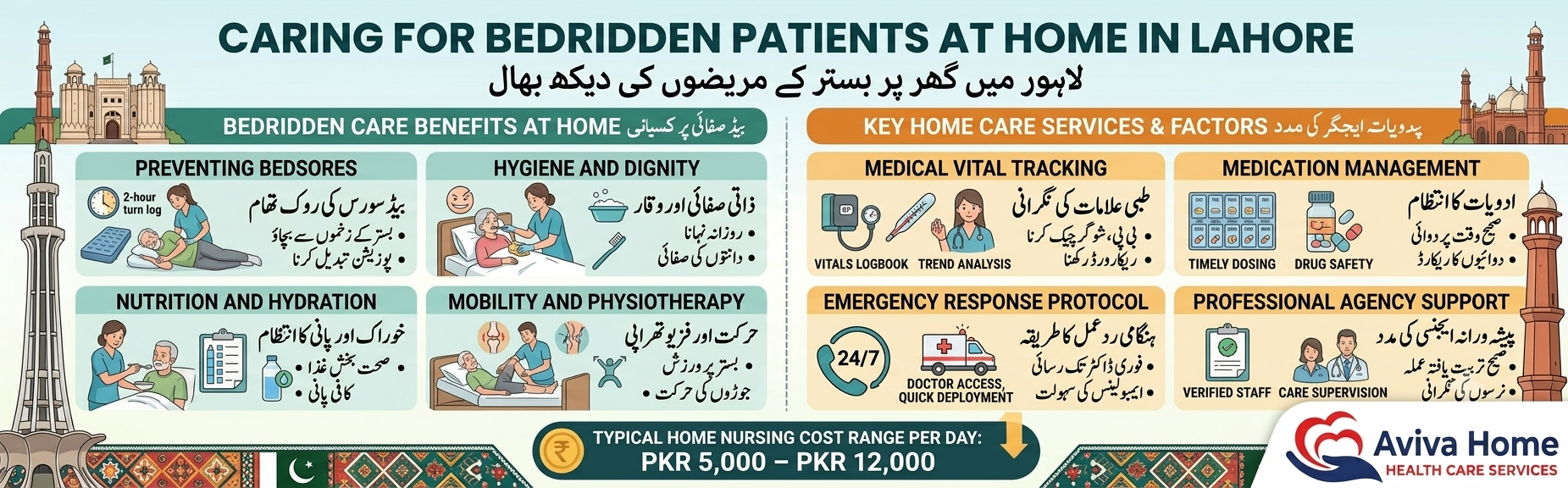
The absolute gold standard for bedsore prevention is changing the patient’s position every two hours, day and night.
-
Use a turning log to track positions (e.g., back, left side, right side).
-
Use soft pillows or foam wedges to keep knees and ankles from rubbing together.
-
Avoid dragging the patient across the sheets when moving them, as friction can tear fragile skin. Lift them gently using a drawsheet instead.
Investment in Specialized Mattresses
Standard mattresses are inadequate for long-term bedridden care. Families should purchase or rent an alternating pressure air mattress (commonly called a bubble mattress). These medical mattresses use an electric pump to continuously inflate and deflate alternating air cells, shifting the pressure points across the patient’s body automatically.
Skin Hygiene and Inspections
Perform a full-body skin check every single day during bathing. Look closely for localized redness that does not fade when pressed, as this is the primary warning sign of a stage-one bedsore. Keep the skin clean and thoroughly dry. In Lahore’s hot climate, sweat accumulates quickly in body folds; use mild soaps and apply barrier creams or zinc oxide ointments to protect areas exposed to moisture or incontinence.
3. Maintaining Personal Hygiene and Dignity
Maintaining cleanliness is vital not only for controlling infection but also for preserving the patient’s dignity and mental well-being. Being dependent on others for basic grooming can cause profound depression and anxiety.
The Daily Bed Bath
For patients who cannot leave the bed, a daily sponge bath is essential. Gather all supplies beforehand, including basins of warm water, mild body wash, clean towels, and fresh clothes.
-
Keep the patient covered with a sheet, exposing only the specific part of the body currently being washed to maintain modesty and keep them warm.
-
Wash from clean areas to dirty areas, starting with the face and moving downward.
-
Pay special attention to hidden areas: behind the ears, under the breasts, the groin, and between the toes.
Perineal Care and Incontinence Management
If the patient uses adult diapers, they must be checked every few hours and changed immediately after soiled. Leaving a patient in a wet diaper causes rapid skin maceration and severe diaper rash. Clean the perineal area gently from front to back using wet wipes or warm water, dry the skin completely, and apply a thick layer of moisture barrier cream before putting on a fresh diaper.
Oral Health and Hair Care
Do not neglect oral hygiene. Brush the patient’s teeth twice daily using a soft toothbrush and minimal water, or use specialized oral swabs if they have swallowing difficulties, preventing conditions like aspiration pneumonia. Wash their hair regularly using waterless, rinse-free shampoo caps, or position an inflatable bedside hair-washing basin beneath their head.
4. Nutritional Management and Hydration
A sedentary, bedridden lifestyle alters the body’s metabolism and digestion. Without proper nutritional care, patients face severe risks of muscle wasting, malnutrition, and painful gastrointestinal complications.
Combating Chronic Constipation
Immobility slows down bowel movements significantly. To prevent painful fecal impaction, ensure the patient’s diet is rich in dietary fiber. Incorporate local, easily digestible foods like soft khichdi, mashed oats, vegetable purees, and stewed fruits. If recommended by your physician, safe stool softeners can be integrated into their daily routine.
Hydration in Lahore’s Climate
Dehydration develops rapidly in Lahore’s intense heat, especially in elderly individuals who may lose their natural sense of thirst. Keep a strict fluid intake chart. Offer small sips of water, fresh fresh juices, or coconut water every hour. Avoid sugary carbonated drinks, which can upset stomach health and cause sudden spikes in blood sugar.
Specialized Feeding (NG Tube Care)
If your loved one has a Nasogastric (NG) tube due to swallowing paralysis, feeding requires strict medical precision.
-
Elevate the patient’s head to at least a 45-degree angle during the feed and keep them upright for 30 to 60 minutes afterward to prevent dangerous acid reflux and choking.
-
Check tube placement before every single meal.
-
Flush the tube with clean water before and after feeding to prevent blockages and bacterial buildup inside the plastic line.
5. Respiratory Care and Pulmonary Hygiene
When a person lies flat on their back for weeks at a time, their lungs cannot fully expand. Fluid and mucus accumulate in the lower lung fields, creating a perfect breeding ground for bacteria and leading to a life-threatening condition known as hypostatic pneumonia.
Position Elevation
Whenever the patient is awake, use a medical hospital bed or prop them up with firm pillows to a semi-sitting position. This allows gravity to pull the diaphragm downward, helping the lungs expand fully and breathe easier.
Chest Physiotherapy and Coughing Exercises
If the patient is capable, encourage deep breathing exercises and intentional coughing every few hours to dislodge trapped secretions. For weak patients, family members or caregivers can perform gentle chest percussion—clapping the patient’s back with cupped hands over the lung segments—to loosen thick mucus so it can be coughed up easily.
6. Mobility, Range-of-Motion, and Joint Protection
An immobile muscle begins to waste away within days, and joints that are not moved regularly will freeze into permanent, painful deformities known as contractures. Once a contracture forms, straightening the limb becomes nearly impossible without surgery.
Passive Range of Motion (PROM) Exercises
A caregiver must perform gentle stretching exercises on all major joints at least twice a day. Support the limbs gently and move the ankles, knees, hips, wrists, and elbows through their natural, pain-free range of motion. This preserves joint flexibility and stimulates vital blood circulation, significantly reducing the dangerous risk of Deep Vein Thrombosis (DVT)—blood clots forming in the deep veins of the legs.
Foot Drop Prevention
When a patient lies in bed for long periods, the foot naturally rests in a pointed position, causing the calf muscle to shorten permanently (foot drop). Support the feet at a 90-degree angle using specialized foot-drop boots, or prop a firm foam block securely against the soles of their feet.
7. Psychological and Emotional Support
Being entirely confined to a bed can take a severe psychological toll. Patients frequently experience profound grief over their lost independence, leading to intense anger, severe anxiety, and deep social isolation.
Enhancing the Room Environment
Do not isolate the bedridden patient in a dark, back bedroom. Place them in a well-ventilated, bright room with a window that lets in natural sunlight. Keep a television, radio, or tablet close by so they can watch the news, listen to recitation of the Holy Quran, or stream their favorite shows.
Social Interaction and Inclusion
Make it a priority to sit and talk with your loved one about daily family matters, rather than only interacting with them when administering medicine or changing diapers. Encourage grandchildren and relatives to visit them, ensuring they still feel like an appreciated, active member of the family unit.
8. Medication Safety and Medical Vital Tracking
Bedridden patients typically have complex medical histories, requiring multiple medications throughout the day. Mismanaging these prescriptions can lead to severe health crises.
Maintaining a Vitals Logbook
Keep a detailed medical journal right next to the patient’s bed. Measure and write down their vital signs at fixed times every morning and evening:
-
Blood Pressure (BP)
-
Heart Rate (Pulse)
-
Body Temperature
-
Blood Glucose Levels (especially if diabetic)
-
Oxygen Saturation (SpO2) using a pulse oximeter
Having this organized written log is invaluable when consulting your doctor, helping them make accurate adjustments to treatment plans based on clear trends.
9. Transitioning to Professional Home Nursing Care in Lahore
As detailed above, the daily routine required to care for a bedridden patient perfectly is a full-time, 24-hour job. For families managing careers, household duties, and children, providing this intense level of clinical care consistently can lead to severe caregiver burnout, which accidentally compromises the patient’s health.
Hiring professional home nursing services bridges this gap seamlessly, bringing hospital-standard clinical expertise directly to your loved one’s bedside. Trained medical nurses excel where family members often struggle: they are experts in clinical wound management, sterile catheter care, precise NG tube feeding, and noticing subtle changes in vital signs before they escalate into emergencies.
If your family is looking for compassionate, professional, and reliable support for a bedridden relative, you can find customized home care solutions through Aviva Home Health Care Services. They provide fully verified, licensed male and female nurses across Lahore who specialize in comprehensive bedridden care, bedsore prevention, and clinical medical management. Partnering with an established, trusted agency ensures your loved one is cared for safely and with the utmost respect, giving your family true peace of mind.