
Home Nursing Care for Diabetic Patients in Lahore
Home Nursing Care for Diabetic Patients in Lahore
Managing diabetes is a daily challenge for thousands of families across Lahore. Diabetes is a chronic, long-term health condition where the body cannot properly convert food into energy, leading to high levels of glucose or sugar in the blood. If left unchecked, fluctuating blood sugar levels can damage major organs over time. It can cause kidney failure, blindness, heart attacks, stroke, and nerve damage that leads to deep, painful wound
s on the feet.
For many patients, especially the elderly or those recovering from a major health setback, traveling through the crowded streets of Lahore to visit a clinic or hospital every single day for checkups, blood tests, and insulin injections is completely exhausting. It also exposes a patient with a weak immune system to dangerous infections inside hospital waiting rooms.
This is why professional home nursing care has become such a valuable solution. Having a qualified, registered nurse right inside your home ensures that your loved one’s diabetes is managed safely, accurately, and comfortably without the stress of constant hospital trips. This comprehensive article explains exactly how professional home nursing care helps diabetic patients stay healthy at home in Lahore.
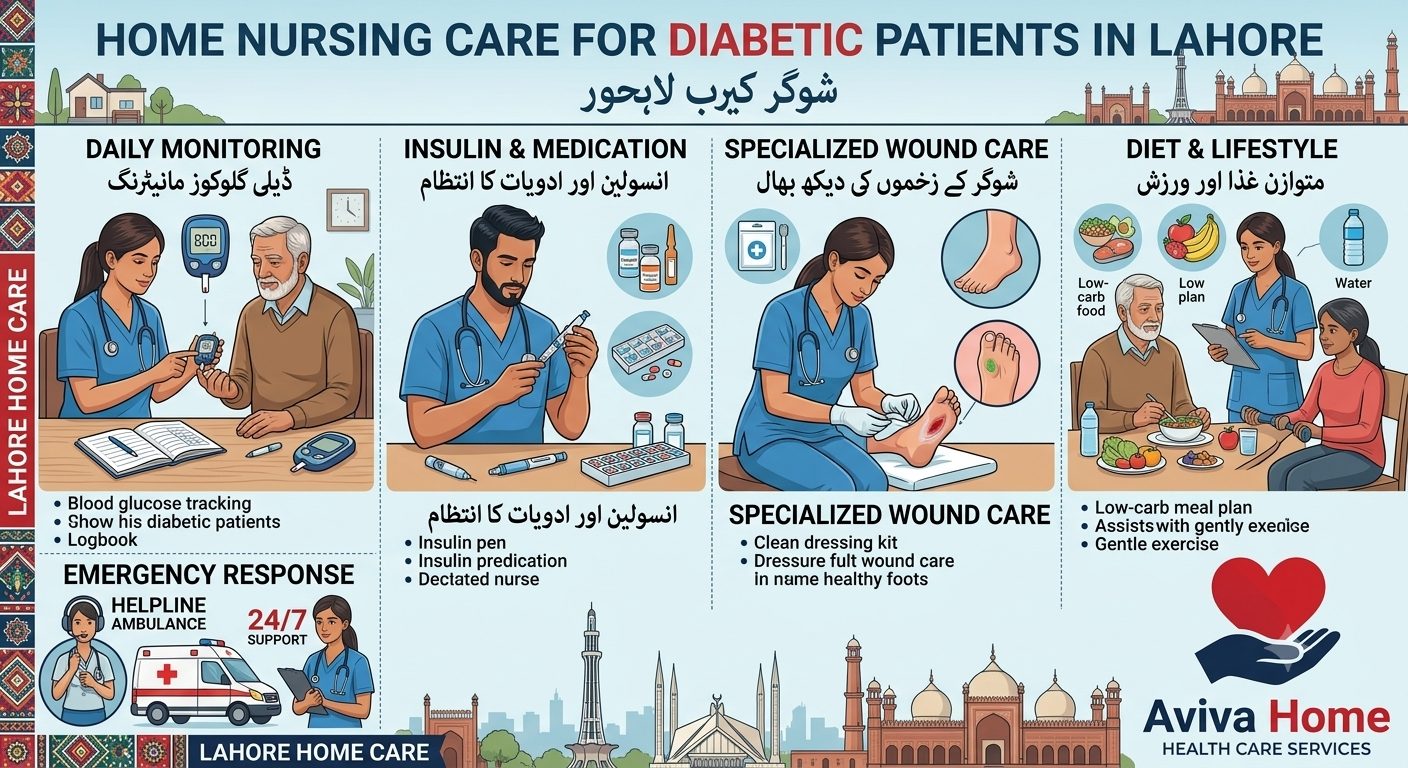
1. Daily Blood Glucose Monitoring and Tracking
The absolute foundation of managing diabetes is keeping blood sugar levels within a safe target range. Because blood sugar changes constantly based on what a person eats, how much they move, and their stress levels, regular tracking is a vital duty.
A professional home nurse handles this responsibility with high clinical precision:
-
Routine Testing: The nurse checks the patient’s blood sugar levels multiple times a day using a digital glucometer. They test before breakfast, after meals, and before bedtime to see exactly how the patient’s body is reacting to food and medicine.
-
Perfect Documentation: The nurse maintains a daily written logbook or a digital chart of every single reading. This detailed history is incredibly useful for your family doctor or consultant physician during follow-up checkups, allowing them to make smart changes to the patient’s prescriptions.
-
Quick Detection of Abnormal Levels: A trained nurse knows how to spot the early warning signs of two highly dangerous conditions:
-
Hyperglycemia (Dangerously High Sugar): This can cause extreme thirst, blurry vision, frequent urination, and confusion.
-
Hypoglycemia (Dangerously Low Sugar): This is a sudden emergency that causes sweating, shaking, a rapid heartbeat, dizziness, and even fainting or seizures if not treated immediately.
-
2. Accurate Medication and Insulin Administration
Many diabetic patients, especially those with Type 1 diabetes or advanced Type 2 diabetes, m
ust take several different pills every day and inject insulin at exact times. If a dose is missed, given too late, or given in the wrong amount, the results can be life-threatening.
A qualified home nurse brings hospital-level discipline to managing these medications:
-
Safe Insulin Injections: The nurse knows exactly how to draw the correct units of insulin into a syringe or use an insulin pen. They are trained to inject it into the right areas of the body, such as the abdomen or thigh, while constantly rotating the injection spots to prevent hard lumps from forming under the skin.
-
Strict Hygiene Protocols: Nurses follow strict sanitization steps, ensuring that needles are never reused, hands are washed properly, and the injection area is cleaned with alcohol swabs to avoid bacterial infections.
-
Organizing the Pill Schedule: Many elderly diabetic patients also suffer from high blood pressure or cholesterol, meaning they have a complex schedule of tablets to take. The nurse organizes their weekly pill boxes, making sure the patient never forgets a pill or accidentally doubles their dose out of forgetfulness.
3. Specialized Diabetic Wound Care and Prevention
One of the most dangerous complications of long-term diabetes is nerve damage, a condition known as diabetic neuropathy. This damage usually occurs in the feet and legs, meaning the patient loses the ability to feel pain, heat, or cold.
Because of this lack of feeling, a diabetic patient can walk around with a small stone in their shoe, a blister, or a tiny cut for days without ever noticing it. Combined with poor blood circulation caused by diabetes, these minor injuries do not heal on their own. Instead, they quickly turn into deep, infected ulcers that can lead to gangrene and, in severe cases, the amputation of the foot or leg.
A skilled home nurse provides vital preventive care and wound management:
-
Daily Foot Inspections: The nurse examines the patient’s feet every single day, carefully looking between the toes and under the soles for any signs of redness, swelling, cracks, blisters, or ingrown toenails.
-
Specialized Dressing Techniques: If the patient already has an open diabetic wound or ulcer, a home nurse is fully trained to manage it using sterile clinical procedures. They clean the wound with proper medical solutions, apply prescribed healing ointments, and wrap it in specialized bandages that protect it from dirt and bacteria while encouraging new skin growth.
-
Pressure Sore Prevention: For bedridden or paralyzed diabetic patients, the nurse assists them in changing positions every two hours to prevent the development of painful bedsores.
4. Diet Monitoring and Lifestyle Guidance
Taking medicine and injecting insulin will not work effectively if a patient continues to eat food that is high in sugar, simple carbohydrates, and unhealthy fats. In a city like Lahore, where traditional foods are often rich in oil, starch, and sugar, maintaining a strict diabetic diet can be incredibly difficult for a family to manage alone.
A professional home nurse helps keep the patient’s lifestyle on track:
-
Meal Planning and Supervision: The nurse works closely with the family to make sure the patient is served balanced, low-sugar, low-carbohydrate meals at fixed hours every day. Eating at the same time daily helps prevent sudden drops or spikes in blood glucose levels.
-
Hydration Tracking: Dehydration can cause blood sugar concentrations to rise. The nurse monitors how much water the patient drinks throughout the day, which is especially important for protecting kidney health.
-
Gentle Physical Activity: Regular movement helps the body use insulin more effectively and lowers blood sugar levels. For weak or elderly patients, the nurse provides physical assistance for light walks around the lounge or helps them perform gentle, low-impact stretching exercises in bed to keep their blood circulation flowing smoothly.
5. Emergency Response and Peace of Mind
The most frightening aspect of managing a diabetic patient at home is the unpredictability of the disease. A patient’s health status can change in a matter of minutes. If a family relies entirely on untrained relatives, panic can take over during an unexpected health crisis.
Hiring a certified home nursing provider completely eliminates this fear:
-
Training in Basic Life Support (BLS): Registered home nurses are fully trained in CPR and emergency first-aid procedures. If a patient becomes unresponsive or faint, the nurse knows exactly how to stabilize them.
-
Direct Access to Doctors: Professional agencies ensure that their on-site home nurses have a direct, 24/7 communication line to senior medical officers or care managers. If a reading looks unusual, the nurse can immediately consult a doctor for advice on adjusting a dose.
-
Emergency Coordination: If a patient suffers a severe crisis that requires immediate hospitalization, the nurse knows how to efficiently manage the situation. They can coordinate with local ambulance services in Lahore, pack the patient’s medical charts and medication logs, and ensure a smooth, organized transfer to the nearest emergency room.
Conclusion: Securing the Best Care in Lahore
Diabetes is a complex, serious condition that requires constant, professional vigilance. Expecting untrained family members to perfectly manage blood tests, insulin calculations, strict diets, and medical wound dressings can lead to high stress and accidental medical mistakes. Bringing a qualified nurse into your home is the best way to safeguard your loved one’s long-term health while keeping them in a peaceful, comfortable environment.
When searching for reliable and experienced medical professionals in the city, consider exploring the dedicated nursing programs at Aviva Home Health Care Services (available via their official website at https://www.avivahomehealthcareservices.pk/). They provide highly trained, fully verified male and female nurses across Lahore who specialize in comprehensive diabetes care, insulin administration, and clinical wound management. By partnering with a professional service, you can ensure your family member receives the exact medical attention and empathetic care they need to live a long, happy, and stable life right at home.